
AI-generated illustration.
The boy who cried wolf story is one of the most famous moral stories for kids ever told. For more than two thousand years, this best moral story for kids has taught children one simple, unforgettable lesson: trust is built by telling the truth, and lost by telling lies.
In this traditional story, a young shepherd boy learns the hard way what happens when nobody believes a liar, even when he finally tells the truth. Like the honest woodcutter and the magic axe and the loyal dog in the Mahabharata, this timeless folk story is perfect for bedtime reading, classroom discussion, or any moment you want to share a tale about doing the right thing. If you are hunting for the best moral story for kids 2026, or a favourite you can share in 2027 and beyond, you have found it.
The Story of the Boy Who Cried Wolf
The best moral story for kids begins with a boy, a flock of sheep, and a hill that seemed to offer nothing but boredom.
The Boy and His Sheep
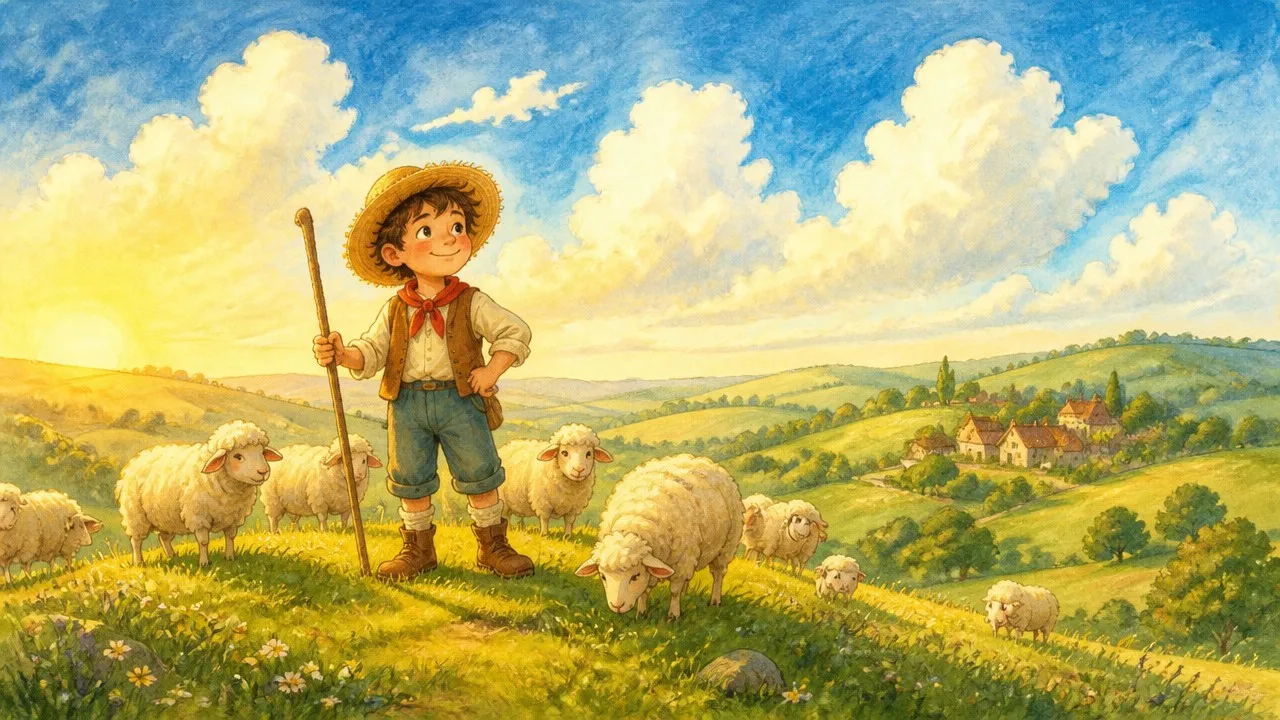
Long ago, in a little village at the foot of a green hill, there lived a shepherd boy. Every morning, he led his flock of woolly sheep up the hillside, where they could graze on sweet grass under the wide blue sky.
It was a quiet job. The sheep ate. The sun shone. The hours crawled by like sleepy snails. And the boy… the boy was bored.
“Nothing ever happens here,” he sighed, watching the village below. Farmers worked in the fields. Bakers baked bread. Children played in the lane. And he sat on a rock with nothing to do but count sheep, all day, every day.
AI-generated illustration.
The First Cry of “Wolf!”
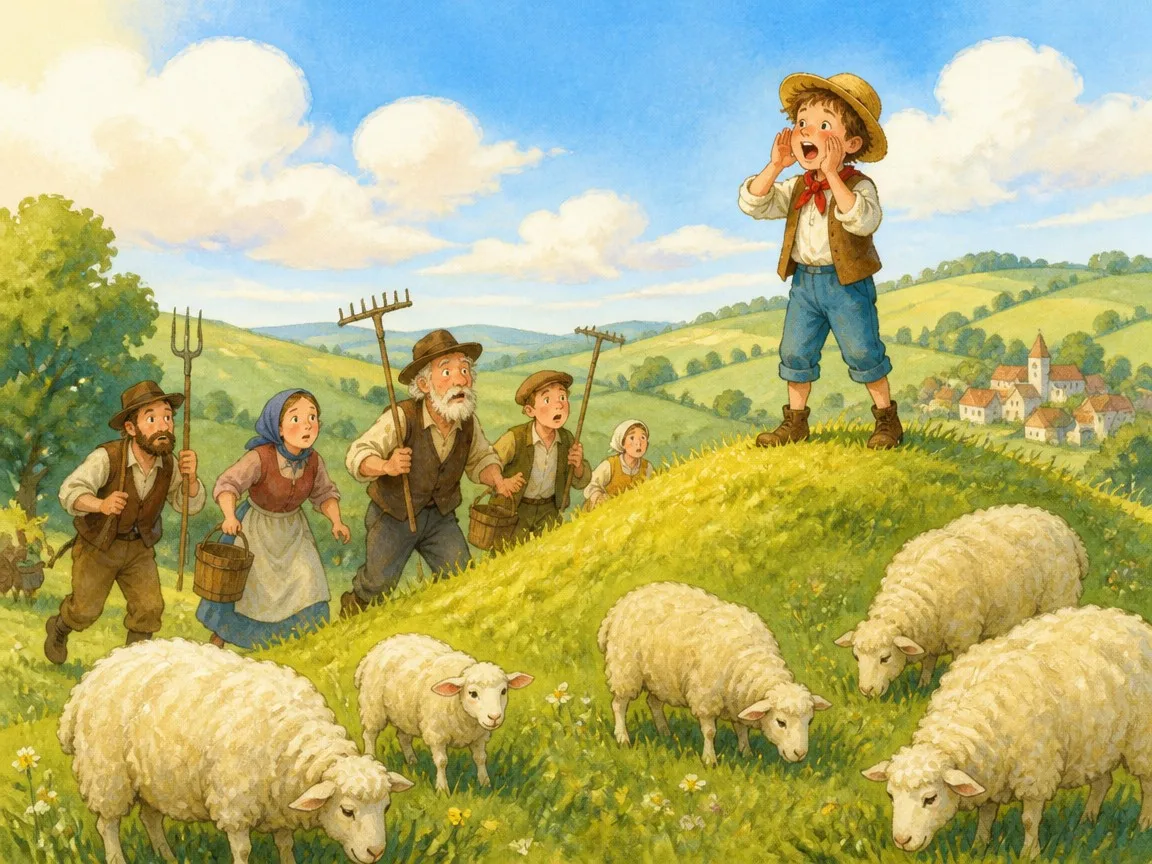
One afternoon, a naughty idea popped into his head. He jumped onto a rock, cupped his hands around his mouth, and shouted at the top of his voice:
“Wolf! Wolf! A wolf is eating my sheep!”
Down in the village, farmers dropped their tools. Women rushed out of their houses. Men grabbed pitchforks and rakes and came running up the hill as fast as they could, panting and sweating.
“Where is the wolf?” they cried.
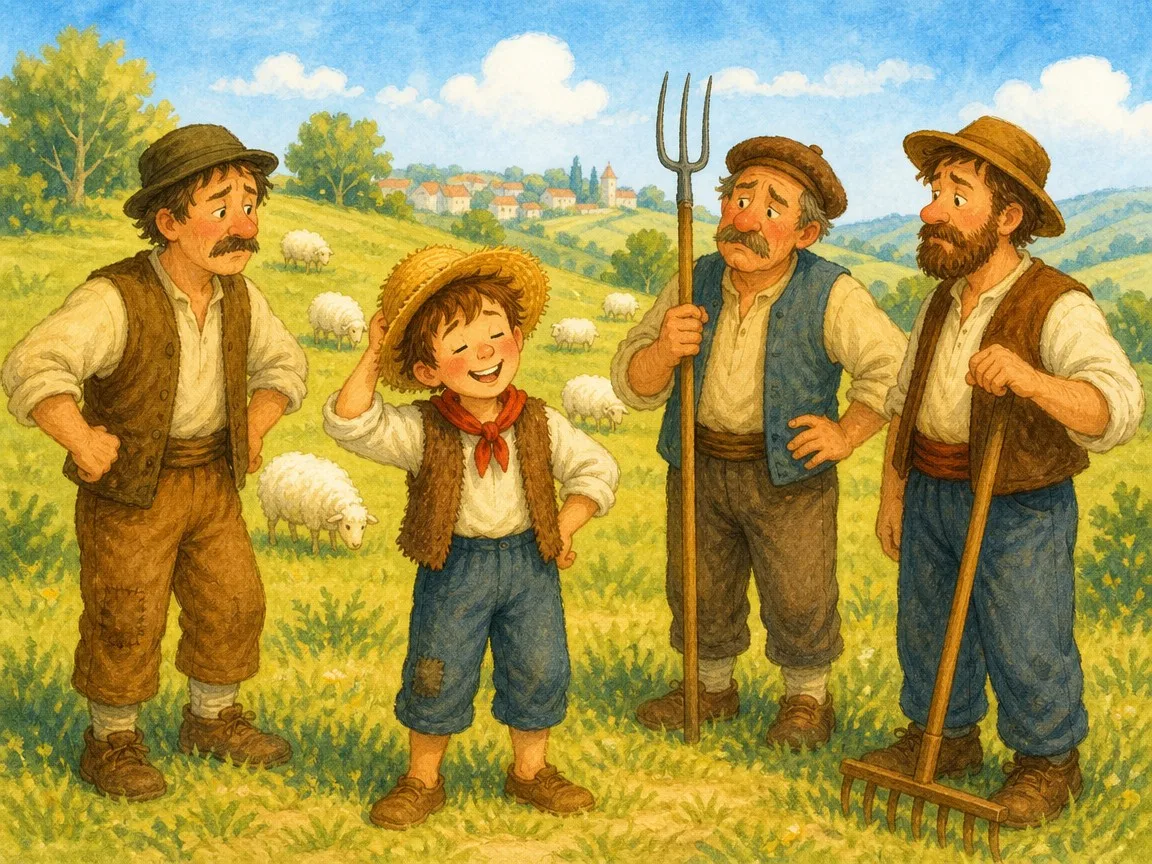
The boy laughed and laughed. “There is no wolf! I tricked you!”
The villagers were not amused. “That was not funny,” they warned him. “If you cry wolf when there is no wolf, one day nobody will come when there really is one.”
But the boy only giggled. What a wonderful game!
The Second Cry of “Wolf!”
The very next day, the boy was bored again. So he played the trick again.
“Wolf! Wolf! A wolf is eating my sheep!”
Once more, the villagers came running, pitchforks ready and hearts pounding. And once more, they found the boy rolling on the grass with laughter and a flock of perfectly safe sheep.
“You lied to us twice!” the farmers shouted, red-faced. “We are done running up this hill for your games.” They marched back to the village, shaking their heads.
AI-generated illustration.
The Real Wolf
A few days later, the boy was watching his sheep as usual when he heard a rustling in the bushes. Out stepped a real wolf, big and grey, with hungry eyes.
The sheep bleated in terror and scattered in every direction. The boy’s heart jumped into his throat. He scrambled onto the rock and screamed with all his might:
“Wolf! Wolf! A wolf is eating my sheep! Help! Please help!”
He shouted until his throat hurt. But down in the village, the farmers only shrugged.
“There he goes again,” they said. “That boy will never learn.” And nobody came.
AI-generated illustration.
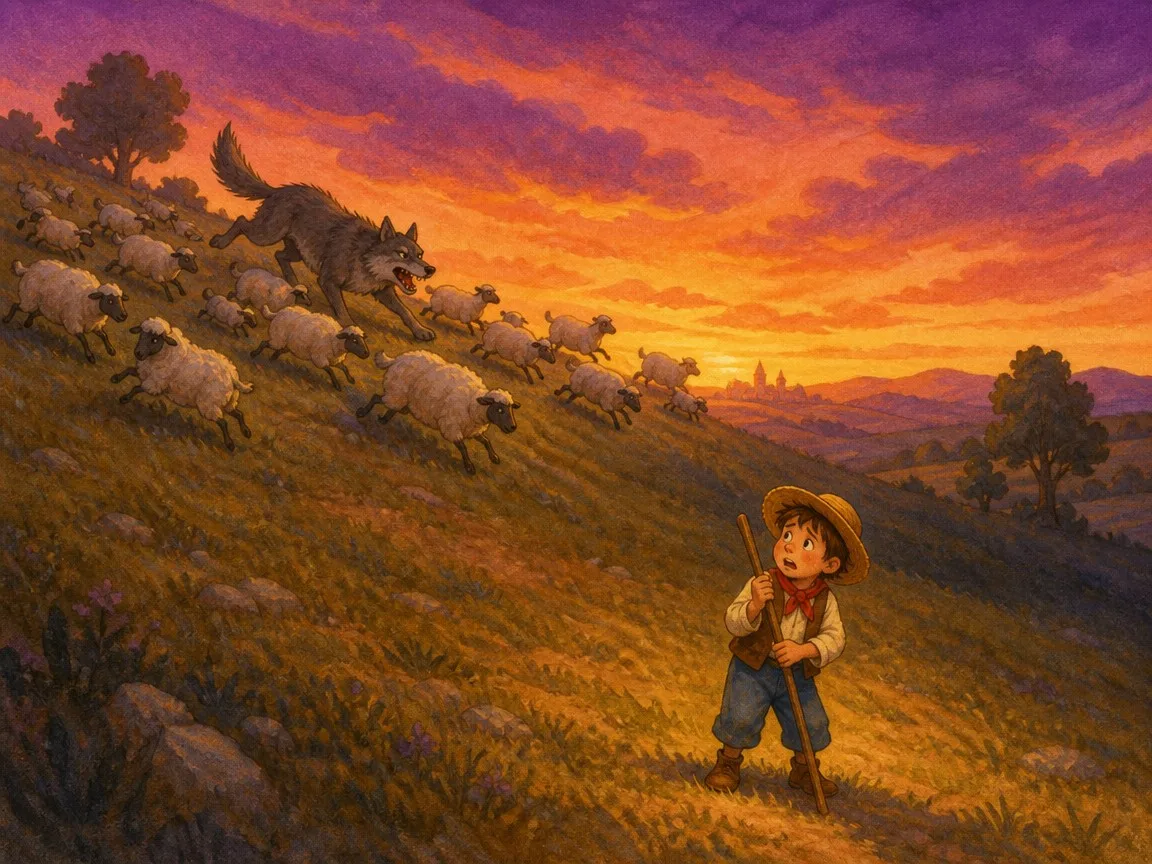
The wolf chased the sheep down the hill and into the forest. By the time the boy stumbled back to the village, his flock was gone, and with it, the trust of everyone who knew him.
The boy cried, but it was too late. He had spent his words on false alarms, and now, on the one day he truly needed help, nobody believed him.
The Moral of the Story
The lesson of this best moral story for kids is one every child should carry for life:
“Nobody believes a liar, even when he tells the truth.”
Lies may seem like harmless fun in the moment, but every lie spends a little of your trust. Cry “wolf” too many times, and the people who love you stop listening. Honesty, on the other hand, is like a savings box: every truth you tell adds to it, so that when you really need help, others will believe you and come running. That is the lesson that makes this the best moral story for kids, generation after generation.
Why This Folk Story Is Still So Popular Today
The boy who cried wolf is not just a best moral story for kids. It is one of the most famous traditional stories in the world. It comes from Aesop’s Fables, a collection of ancient Greek fables told more than 2,500 years ago, and it has been passed down through generations in almost every culture.
Why does it still work? Because the lesson never ages. In a world of fake news, clickbait and empty promises, knowing who to trust matters more than ever. That is why this story keeps appearing in classrooms, bedtime routines and even newsrooms. it is a best trending story that never really stopped trending. Search for the best moral story for kids 2026 or the best moral story for kids 2027, and this fable still rises to the top, because parents and teachers return to it year after year.
How to Use This Story with Children
There are many ways to enjoy this best moral story for kids with your children.
- Bedtime reading: read it slowly, and let the boy’s “Wolf!” cries grow louder each time for effect. Follow up with a gentle bedtime story to end the night calmly.
- Ask questions: stop before the ending and ask, “What do you think will happen now?”
- Role-play: let your child play the villagers, and ask how they would feel after being tricked twice.
- Connect to real life: talk about times when telling the truth, even a small truth, made a difference.
Comprehension Questions for Children
These questions help children follow the story and remember its lesson. They work well at home, in the classroom, or anywhere you share this best moral story for kids.
Why did the boy cry wolf the first time?
The boy cried wolf because he was bored. He watched sheep all day and wanted some excitement, so he played a trick on the villagers.
What did the villagers do when they heard the cries?
They dropped their tools, rushed out of their houses, and ran up the hill with pitchforks and rakes to help the boy.
How did the villagers feel after the second false alarm?
They were angry. They told the boy they were done running up the hill for his games, and they marched back to the village shaking their heads.
What happened when the real wolf came?
The boy shouted for help, but nobody came because the villagers no longer believed him. The wolf chased the sheep away, and the boy lost his flock and their trust.
What is the main lesson of the boy who cried wolf?
The main lesson is that nobody believes a liar, even when he tells the truth. Honesty builds trust, and lies destroy it.
Discussion Topics for Teachers and Parents
- Have you ever been tempted to exaggerate a story to get attention? What happened?
- How can the boy rebuild the trust of the villagers after the story ends?
- Why is it important to tell the truth even when it is hard?
- How is this best moral story for kids similar to the honest woodcutter story?
- What would you have done differently if you were the shepherd boy?
Vocabulary from the Story
- Shepherd: a person who looks after sheep.
- Flock: a group of sheep that stay together.
- False alarm: a warning that turns out to be a trick, when nothing is actually wrong.
- Trust: the belief that someone is honest and will do the right thing.
- Moral: the lesson that a story teaches.
Frequently Asked Questions
What is the moral of the boy who cried wolf story?
The moral is that nobody believes a liar, even when he tells the truth. The story teaches children that lying destroys trust, and honesty is the only way to keep people’s confidence. It is exactly why this remains the best moral story for kids for bedtime, classrooms and story time.
Who wrote the boy who cried wolf?
The story is attributed to Aesop, the ancient Greek storyteller. It is one of Aesop’s Fables, and versions of it exist in many cultures and languages around the world.
What age group is the boy who cried wolf for?
The story suits children aged 3 to 10. It uses simple language, a clear sequence of events and a single strong lesson, making it ideal for preschoolers, early readers and classroom discussions. It is also a wonderful pick for any best moral story for kids 2027 reading list.
Is the boy who cried wolf a real story?
It is a fable, a made-up story with a moral, not a true event. But like the best folk stories for children, it carries a truth about human nature that is as real today as it was two thousand years ago.
Read the Full Story
This page is our retelling of the classic fable for young readers, written to be the best moral story for kids for homes and classrooms. To read the original version of the story in its complete traditional form, visit the Library of Congress’s free online edition of The Aesop for Children:
- Read “The Shepherd Boy & the Wolf” (The Boy Who Cried Wolf), Library of Congress
- Browse all 140+ fables from The Aesop for Children
The Library of Congress edition is in the public domain, so you can read, share and print it freely. It is perfect for classrooms and story time at home.
About This Story
This boy who cried wolf story is a fresh retelling of the classic Aesop fable, written to be the best moral story for kids, adapted for young readers and made available as a free online story for kids. The illustrations are AI-generated for Online Story Hub.
AI illustration disclosure: The illustrations for this article are original visual interpretations made for Online Story Hub with the help of AI. They are not copied from any protected studio style.