
The Boy Who Drew Cats story with questions and answers is a Japanese tale about a child whose unusual talent saves his life. This fresh retelling uses simple English for independent readers, families, and classrooms. After the story, you will find a summary, moral, vocabulary list, and ten answered comprehension questions.
Source: Cincinnati & Hamilton County Public Library.
The Boy Who Drew Cats Story
A Child With One Great Love
Long ago, a poor farming family lived in a small Japanese village. The parents worked hard, and every child helped as soon as possible. The older boy was strong enough to work beside his father. His sisters helped their mother around the house.
The youngest boy was different. He was bright and kind, but he was small and physically weak. Farm work exhausted him. His parents worried that he would never manage the heavy tasks needed in the fields.
They decided he might have a better future at the village temple. A gentle old priest agreed to teach him. The boy answered difficult questions with surprising wisdom, so the priest welcomed him as a young student.
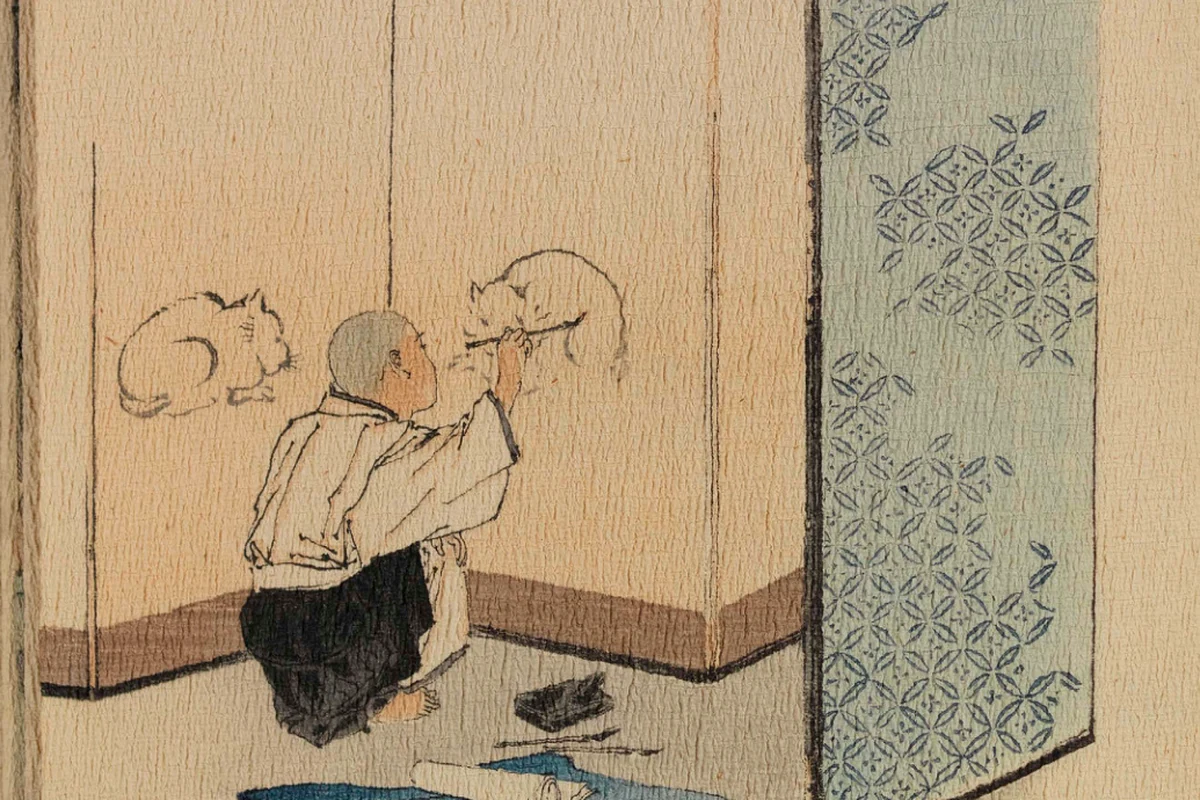
The child studied carefully and obeyed most rules. Yet he could not stop drawing cats. He drew round cats, thin cats, sleeping cats, stalking cats, and cats ready to pounce.
Whenever he found an empty space, he imagined a cat there. Soon cats appeared in the margins of books. More covered the pillars and paper screens. The priest warned him several times, but drawing felt as natural as breathing.
The Priest Gives Strange Advice
One day, the boy filled another screen with lively cats during study time. The priest finally called him over. He explained that the child might become a fine artist, but he was not suited to temple training.
The boy had to leave. Before sending him away, the priest offered one puzzling warning. At night, he should avoid large places and stay in small ones.
The child packed his few clothes with a heavy heart. He did not understand the advice. He was also too ashamed to return home. He feared that his father would think he had wasted an important chance.
Then he remembered a large temple in the next village. Perhaps its priests needed a student. He started walking, although the village stood many miles away.
The Empty Temple
Darkness had fallen when the boy reached the next village. The homes were quiet, and everyone seemed asleep. On a hill beyond the street, the great temple stood against the night sky. A dim light glowed inside.
The boy did not know the temple had been abandoned. A monstrous goblin rat had driven away its priests. Warriors had entered the building to fight it, but none had returned.
The mysterious light was a trap for lonely travelers. Seeing it, the tired boy believed that priests must still live there.
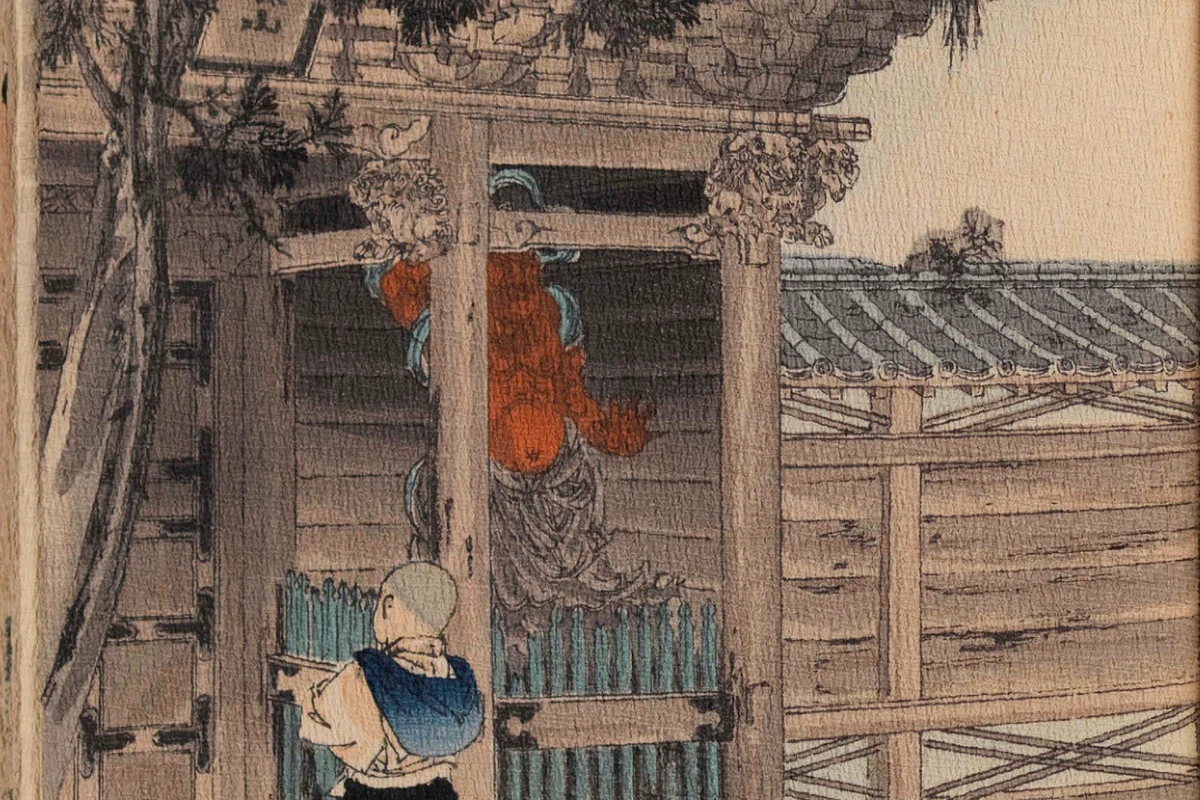
He knocked several times. Nobody answered. The door opened when he pushed it, so he stepped inside and waited.
Dust covered the vast hall. Cobwebs hung from corners. No priest came to greet him. Still, he noticed several large white screens, and his fear gave way to excitement.
He found brushes, an ink stone, and a writing box. Soon he was painting cats again. He covered the screens with alert cats, crouching cats, and fierce cats with raised paws.
A Small Place in the Night
After finishing the pictures, the boy became sleepy. He almost lay down in the open hall. Then the old priest’s warning returned to him.
The temple was certainly a large place. He searched until he found a narrow cabinet with a sliding door. It was cramped and dark, but he climbed inside and closed it. Within minutes, he fell asleep.
Late that night, a terrible sound woke him. Something huge crashed across the hall. Claws scraped the floor. Screeches, snarls, and violent blows shook the temple.
The boy wanted to look through the cabinet door, but fear kept him still. He held his breath and listened. The struggle continued for a long time. At last, every sound stopped.
He remained hidden until sunlight entered through a crack. Only then did he slide open the door.
What the Painted Cats Had Done
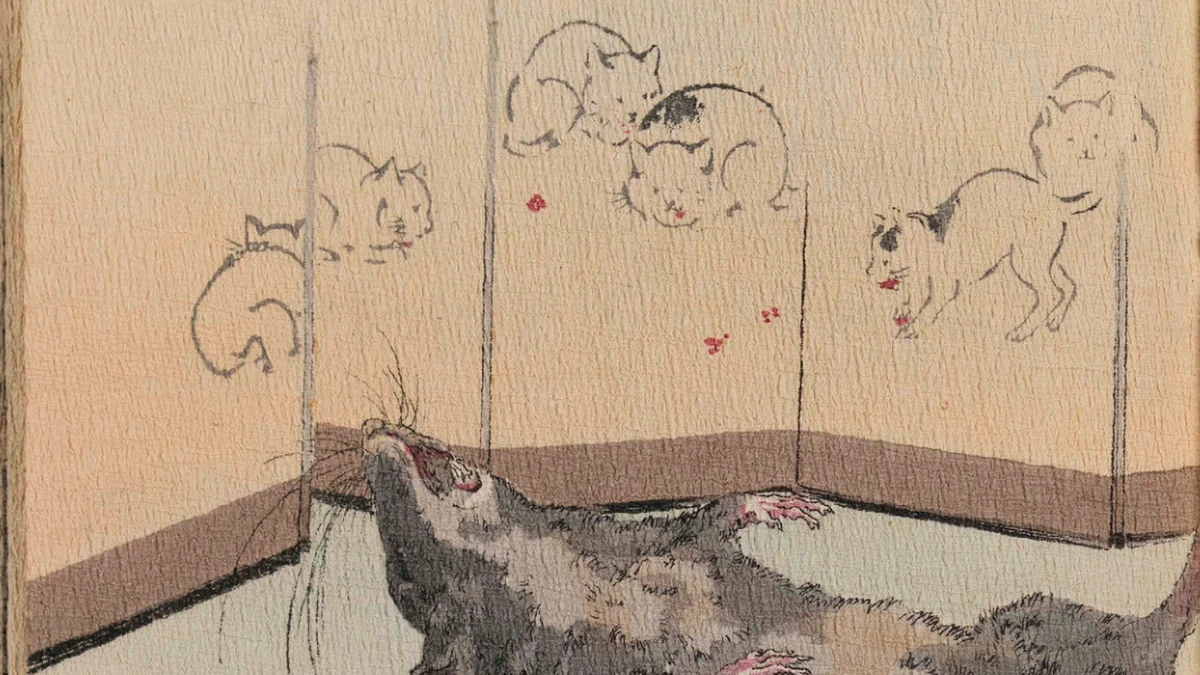
The hall was wrecked. In its center lay an enormous dead rat, larger than any ordinary animal. It was the goblin that had haunted the temple.
No warrior stood nearby. No living cat crossed the floor. The boy looked from the monster to the screens and noticed something strange.
Red stains marked the mouths of his painted cats. Their eyes and bodies were still lines of ink, yet the answer was clear. During the night, his cats had come alive and fought the goblin rat.
The boy finally understood the priest’s advice. The small cabinet had protected him while the battle filled the large hall.
News of the strange victory spread. The temple was safe again, and the boy no longer needed to hide his gift. He continued drawing and eventually became a respected artist. The talent that once made him seem unsuitable had revealed the work he was meant to do.
Short Summary
A weak but clever farm boy becomes a temple student and constantly draws cats. His priest sends him away, advising him to avoid large places at night. In an abandoned temple, the boy paints more cats and sleeps inside a small cabinet. His painted cats come alive and defeat a giant goblin rat. The boy survives and later becomes a successful artist.
What Is the Moral of The Boy Who Drew Cats?
The central moral is that an unusual ability can become a strength when it finds the right purpose. The boy fails at farming and priestly study, but he is not useless. His art protects him and opens a better path.
The story also values wise advice. The boy does not understand the priest’s warning, yet he remembers it and acts carefully. Listening saves him before knowledge catches up with experience.
For another tale about practical wisdom defeating danger, read The Tiger, the Brahman and the Jackal. Readers comparing courage and loyalty may also enjoy Yudhishthira and the Dog.
Characters and Their Roles
- The boy: A clever, gentle child with a powerful need to draw cats.
- The old priest: A teacher who recognizes the boy’s real talent and gives lifesaving advice.
- The parents: Poor farmers who seek work their youngest child can manage.
- The painted cats: The boy’s art made active. They defend their creator during the night.
- The goblin rat: A violent creature that has taken over the abandoned temple.
Useful Vocabulary
- Acolyte: A young helper or student serving in a religious place.
- Temple: A building used for worship and religious practice.
- Ink stone: A stone surface used to prepare ink for brush writing or painting.
- Screen: A movable panel used to divide or decorate a room.
- Goblin: A dangerous imaginary creature in a traditional tale.
- Cramped: Small and uncomfortable because there is little space.
- Instinct: A natural feeling that guides action without long thought.
The Boy Who Drew Cats Questions and Answers
1. Why did the boy’s parents send him to the temple?
They believed he was too small and weak for demanding farm work. Since he was intelligent, they hoped a priest could educate him for a different life.
2. What did the boy do instead of studying?
He drew cats on books, walls, pillars, and paper screens. He understood his lessons, but his need to create pictures repeatedly pulled his attention away.
3. Why did the old priest send the boy away?
The priest realized the boy would not become a good temple student. He also saw genuine artistic talent, so leaving gave the child a chance to follow it.
4. What advice did the priest give him?
The priest told him to avoid large places at night and stay in small places. The warning seemed confusing until the boy entered the haunted temple.
5. Why did the boy enter the abandoned temple?
He hoped its priests might accept him as a student. He did not know a goblin rat had driven them away, and the light made the building appear occupied.
6. Where did the boy sleep?
He slept inside a narrow cabinet with a sliding door. Remembering the priest’s words persuaded him not to sleep in the large open hall.
7. What woke the boy during the night?
A fierce battle shook the temple. He heard crashes, scraping claws, shrieks, and heavy blows, but he stayed hidden until morning.
8. How did the goblin rat die?
The cats painted on the screens came alive and attacked it. The stains around their mouths revealed what had happened after the hall became quiet.
9. How did the priest’s warning save the boy?
The warning led him into a small cabinet. That hiding place kept him away from the enormous rat and the violent fight in the main hall.
10. What does the ending teach about talent?
A trait that causes trouble in one setting may become valuable in another. The boy’s drawing distracts him from study, but it also saves his life.
Discussion Ideas for Home or Class
- Was the priest punishing the boy, helping him, or doing both?
- Why does the story leave the night battle unseen?
- Which matters more in the ending, talent or careful listening?
- How would the story change if the boy ignored the warning?
Compare the hidden danger in this tale with the clever escape in The Monkey and the Crocodile. For an older European fairy tale built around persistence, try East of the Sun and West of the Moon.
Source, Edition, and Free PDF
This retelling follows Lafcadio Hearn’s English version. Hasegawa Takejiro published it in Tokyo in 1898 as number 23 in the Japanese Fairy Tale Series. The illustrations used here come from the digitized 1898 Hasegawa edition held by the Cincinnati & Hamilton County Public Library.
- View the illustrated 1898 library scan and catalog record.
- Read the University of Nebraska edition information.
- Download the free Japanese Fairy Tales PDF. The volume identifies Hearn as translator of its first four tales and includes this story.
Frequently Asked Questions
Is The Boy Who Drew Cats a Japanese folktale?
Yes. It is commonly presented as a Japanese fairy tale or folktale. This page follows Lafcadio Hearn’s English version, first issued by Hasegawa in the Japanese Fairy Tale Series.
What age is this retelling for?
The simple language suits many readers from about age eight upward. Younger children may enjoy it aloud, while older students can discuss talent, fear, advice, and identity.
Is the story scary?
It contains suspense, a giant goblin rat, and an unseen fight. The danger is brief and not graphically described, so it works well as a gently spooky classroom or family story.
Final Thought
The boy survives because he respects wise advice without abandoning who he is. His cats begin as a classroom problem and end as protectors. That reversal gives the story its lasting power. A child’s difference may not need to be erased. It may need the right place to grow.