
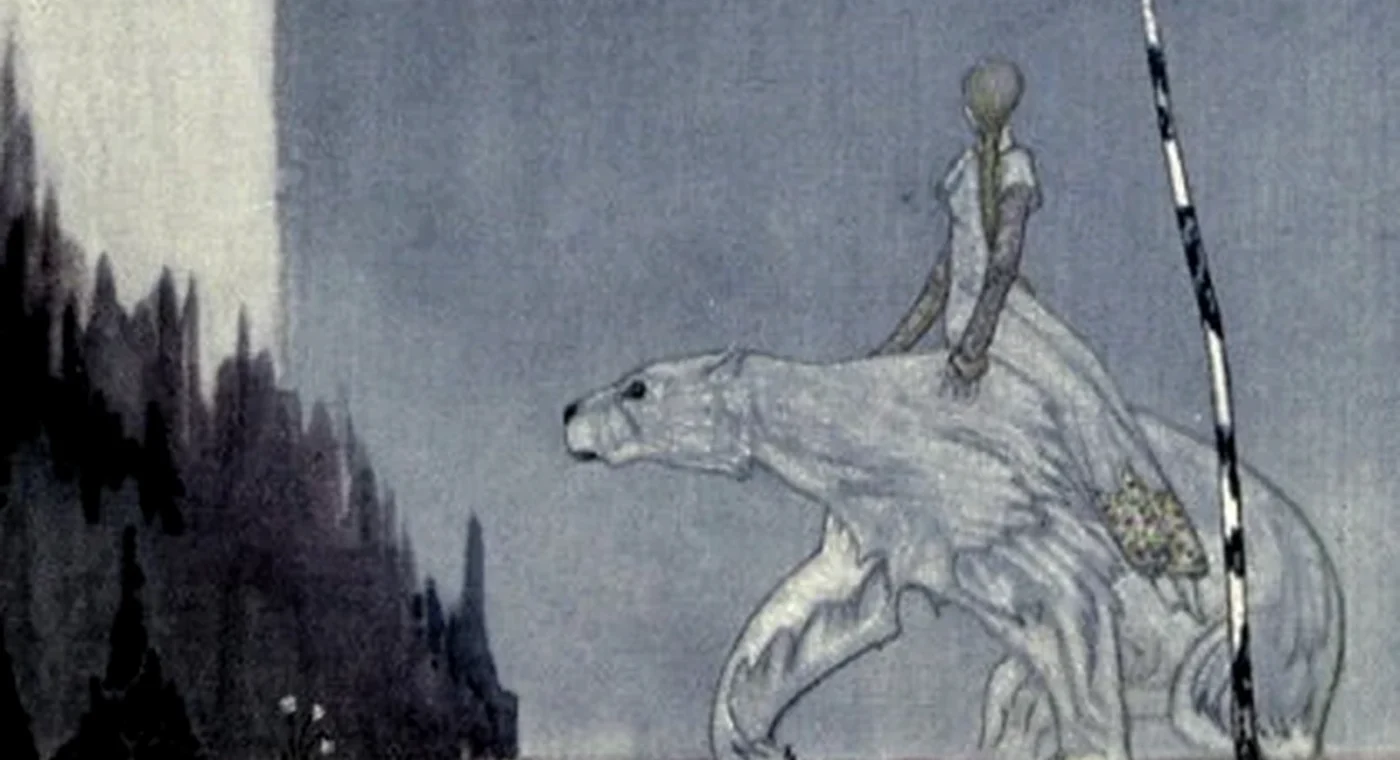
East of the Sun and West of the Moon story with questions and answers is a Norwegian fairy tale about a young woman who crosses the world to repair one terrible mistake. This fresh retelling keeps the white bear, the hidden prince, the four winds, and the distant troll castle. After the story, you will find a short summary, its meaning, vocabulary, and ten answered reading questions.
East of the Sun and West of the Moon Story
The White Bear at the Door
On a stormy autumn evening, a poor farmer heard a heavy knock. When he opened the cottage door, a huge white bear stood in the rain. Its fur shone like snow under the dark sky.
The bear asked for the farmer’s youngest daughter. If she came willingly, the bear promised to make the family rich. The farmer refused at first. Yet the bear told him to think until the following Thursday.
The daughter listened from the hearth. Her family had little food and thin clothes. She was frightened, but she would not let fear make the choice for her.
When the bear returned, she stepped outside in a warm wool cloak. The white bear told her to hold tightly. Then he carried her over hills, through forests, and beyond every road she knew.
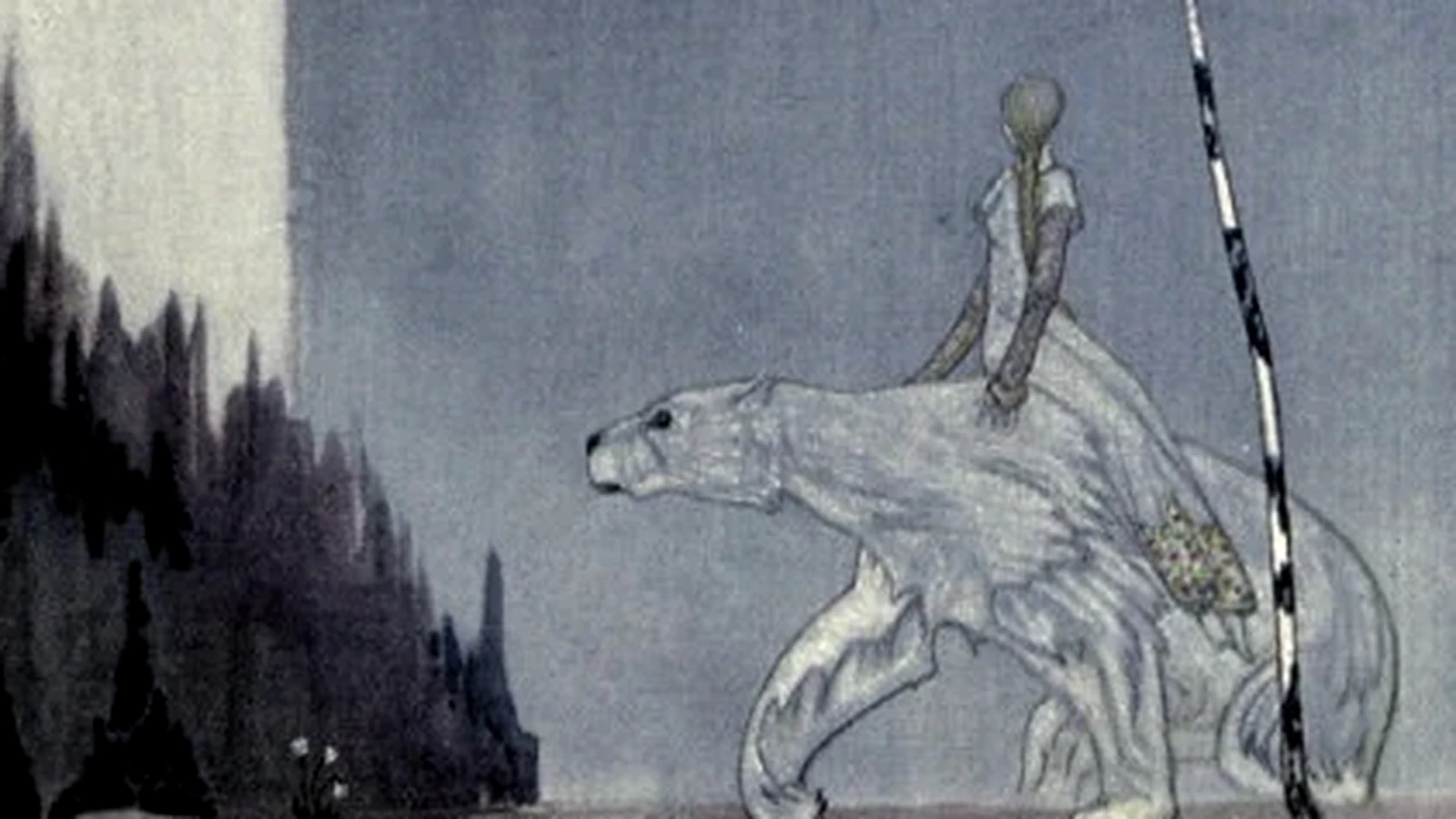
At last they reached a mountain. A door opened in the rock, revealing a palace brighter than any royal hall. Silver lamps lit carved rooms. A table filled itself when she was hungry. Fine clothes appeared when she needed them.
She saw no servants. The bear stayed with her by day. Each night, after every lamp went out, an unseen man entered her room and slept beside her. He always left before dawn.
A Visit Home and a Dangerous Warning
The young woman missed her family. The bear agreed to take her home if she made one promise. She must speak with her mother only when other people were present. She must never let her mother question her alone.
The family now lived in a fine house, just as the bear had promised. Her brothers and sisters welcomed her with joy. Her mother, however, waited for a private moment.
When they were alone, the mother asked who shared her daughter’s dark room. The young woman admitted that she did not know. Her mother imagined a monster and pressed a candle and matches into her hands.
That night in the mountain palace, curiosity defeated trust. The young woman lit the candle. Beside her lay a handsome prince, not a monster. She stared so long that three drops of hot wax fell onto his white shirt.
The prince woke. Sorrow filled his face. He explained that a troll stepmother had enchanted him as a white bear. If the young woman had lived with him for one full year without seeing him, the spell would have ended.
Now he had to go to a castle east of the sun and west of the moon. There he would marry a troll princess with a nose three yards long.
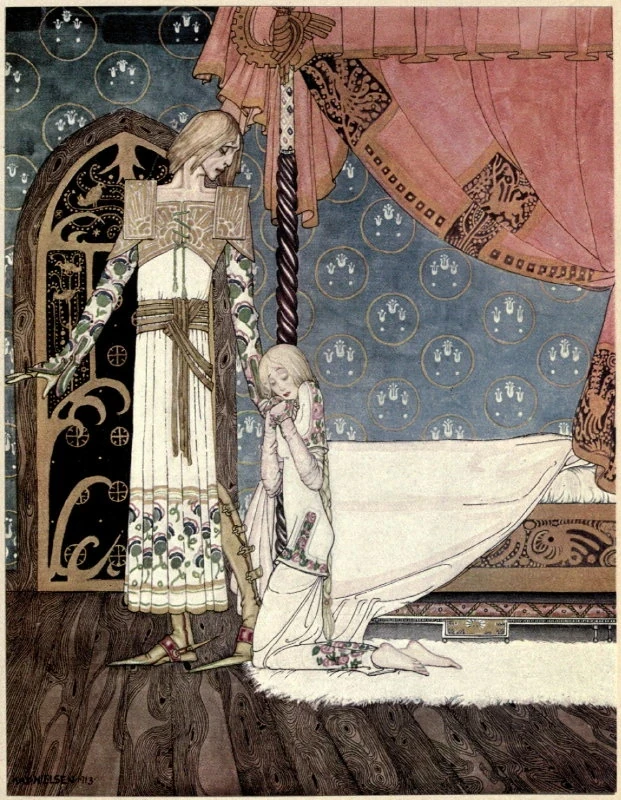
By morning, the palace and prince were gone. The young woman woke alone on a patch of grass in a dark forest. She could have returned home. Instead, she chose to find him.
The Long Road Beyond the Map
She walked until she reached a mountain where an old woman played with a golden apple. The old woman did not know the castle’s location. She lent the traveller a horse and gave her the apple, then sent her to a second old woman.
The second woman owned a golden carding comb. She had never seen the castle either. She gave the comb to the traveller and directed her to a third mountain.
The third old woman had a golden spinning wheel. She also offered help, but not an answer. She gave the wheel to the young woman and sent her onward to the East Wind.
The East Wind had heard of the impossible castle but had never blown so far. He carried her to the West Wind. The West Wind took her to the South Wind. Each wind knew more than the last, yet none knew the whole road.
Finally, the South Wind brought her to the North Wind. He was old, fierce, and tired from travelling across the world. He had once blown an aspen leaf near the castle. The journey had exhausted him, but he agreed to try again.
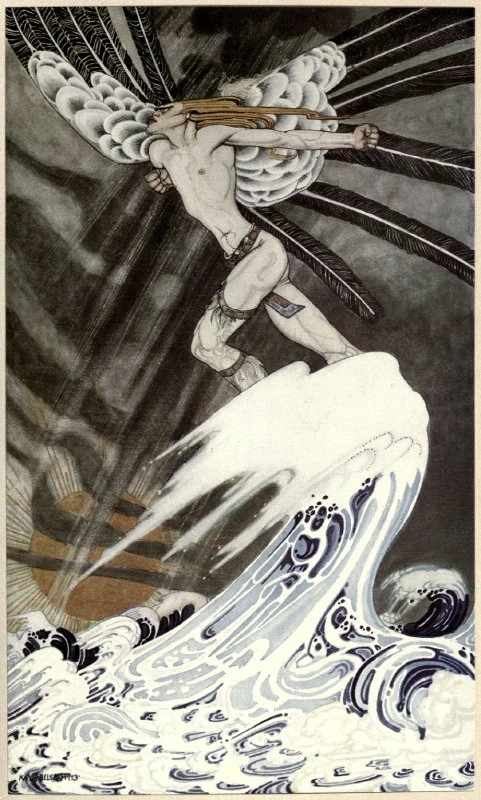
The North Wind gathered all his strength. He lifted the young woman over fields, mountains, and a roaring sea. Waves rose like walls beneath them. The wind grew weaker, but one final gust carried her onto the shore below the troll castle.
Three Golden Bargains
The young woman sat outside the castle and played with the golden apple. The troll princess saw it from a window and wanted it at once.
The traveller refused gold. She asked only to spend one night beside the prince. The troll princess agreed, but secretly gave the prince a sleeping drink. The young woman spoke to him until morning, yet he never opened his eyes.
On the second day, she traded the golden carding comb for another night. Again, the prince slept through every word.
Some prisoners in the castle had heard her crying. They told the prince what had happened. On the third day, he pretended to drink the sleeping potion and poured it away.
The young woman exchanged the spinning wheel for one last night. When she entered the room, the prince was awake. They planned their escape together.
The Shirt That Told the Truth
The next morning, the prince announced a test. He would marry the person who could wash three spots of candle wax from his white shirt. The troll princess tried first. Her scrubbing only spread the marks.
Her troll mother tried next. Then every troll in the castle took a turn. The shirt grew darker and dirtier.
The prince called for the young woman outside. She dipped the cloth into clean water. Because the wax marks came from her candle and her mistake, she alone could wash them away. The shirt became white as snow.
The trolls burst with rage at being defeated. The prince, the young woman, and the castle’s prisoners fled with the treasure that the trolls had hoarded.
They travelled far from the place that lay beyond every map. This time, no secret stood between them. They built their future on courage, patience, and truth.
Short Summary
A young woman leaves home with a mysterious white bear and lives in his enchanted palace. She discovers that he is a prince, but lighting a candle breaks his chance for freedom. The prince is taken to a troll castle east of the sun and west of the moon. The young woman searches for him with help from three old women and the four winds. After three clever bargains, she wakes the prince and defeats the trolls by washing the wax from his shirt.
What Is the Moral of the Story?
The central lesson is that a mistake does not have to be the end of the story. The heroine fails when she lets fear and curiosity overcome a promise. She does not hide from the result. She accepts a hard journey, asks for help, and keeps going when the answer is always farther away.
The tale also warns readers not to judge by appearance. The frightening bear protects the heroine, while the richly dressed trolls deceive and imprison people. Trust should grow from actions, not looks.
For another tale about quick thinking against danger, read The Tiger, the Brahman and the Jackal. Younger readers may also enjoy The Monkey and the Crocodile. Both stories show how courage becomes stronger when joined with good judgment.
Characters and Important Objects
- The young woman: The active hero who makes a mistake and then repairs it.
- The white bear and prince: A man trapped by a troll’s enchantment.
- The mother: A worried parent whose advice helps cause the disaster.
- The three old women: Helpers who provide a golden apple, comb, and spinning wheel.
- The four winds: Guides who move the heroine beyond ordinary roads.
- The troll princess: The prince’s intended captor and false bride.
- The wax-stained shirt: Proof of the heroine’s mistake and her power to put it right.
Vocabulary for Young Readers
- Enchantment: A magic spell placed on a person or place.
- Carding comb: A tool used to prepare wool before spinning.
- Spinning wheel: A device that turns fibres into thread.
- Hoarded: Collected and hidden away, often selfishly.
- Persistence: Continuing even when a task is difficult.
- Retelling: A new version of an older story.
East of the Sun and West of the Moon Questions and Answers
1. Why does the young woman leave with the white bear?
She chooses to help her poor family after the bear promises to make them rich. Although she is afraid, the decision is her own.
2. What promise does she make before visiting home?
She promises not to speak privately with her mother. The bear fears that frightened advice will weaken the trust between them.
3. What happens when she lights the candle?
She sees that the bear is an enchanted prince. Three drops of wax fall on his shirt, and he wakes before the spell’s year is complete.
4. Where is the prince taken?
He is taken to a troll castle said to lie east of the sun and west of the moon, a place beyond normal maps and roads.
5. Who helps the young woman on her journey?
Three old women give her golden objects and directions. The East, West, South, and North Winds then carry her toward the castle.
6. Why is the North Wind important?
He is the only wind who has travelled near the hidden castle. He risks the dangerous trip and carries the heroine over the sea.
7. Why does the prince sleep through the first two visits?
The troll princess gives him a sleeping drink. Prisoners later tell him about the visitor, so he avoids the potion on the third night.
8. How does the heroine use the three golden gifts?
She trades each gift for one night near the prince. The first two bargains reveal the trick. The third gives them time to plan.
9. Why can only she clean the shirt?
The wax came from her candle and represents her mistake. In the tale’s magical logic, accepting responsibility gives her the power to remove it.
10. What makes the heroine brave?
She feels fear, sorrow, and regret, but still acts. Her bravery appears in persistence, honest responsibility, and willingness to accept help.
About This Norwegian Fairy Tale
Peter Christen Asbjørnsen and Jørgen Moe collected Norwegian folk narratives in the nineteenth century. The tale later appeared in English through George Webbe Dasent’s Popular Tales from the Norse. This retelling was checked against the public-domain collection East of the Sun and West of the Moon: Old Tales from the North on Project Gutenberg. The illustrated volume credits Kay Nielsen and states that most selections came from Asbjørnsen and Moe through Dasent’s English versions.
Readers can open the free illustrated text online or download the illustrated EPUB edition. The University of Illinois Library also explains the collectors’ work and the book’s publication history in its rare-book exhibit.
If you want more classic tales for shared reading, browse our folk stories collection. For a completely original journey in a different setting, try The Moonseed Library.