
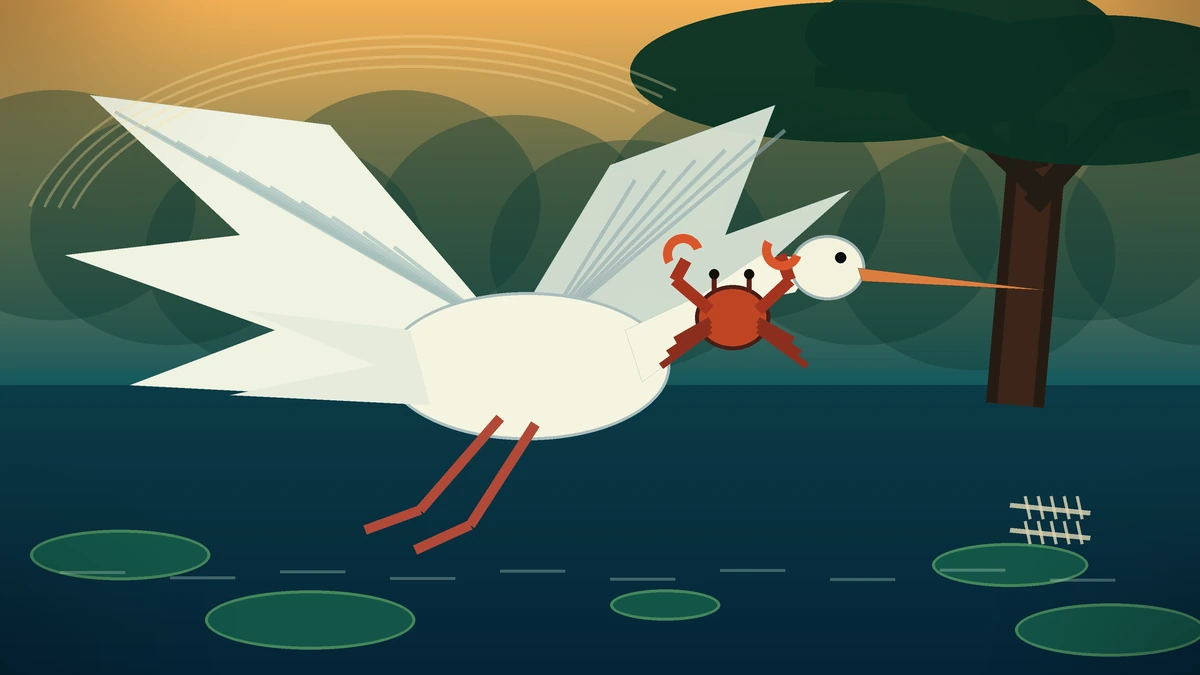
The Cruel Crane Outwitted story with questions and answers is a sharp Indian animal tale about a frightened pond, a false rescuer, and the crab who notices what everyone else misses. This easy retelling keeps the suspense of the older version while giving families and classrooms clear stopping points for prediction, vocabulary, and discussion.
The tale appears in Joseph Jacobs’s 1892 collection Indian Fairy Tales. The digitised edition identifies Jacobs as editor and John Dickson Batten as illustrator.[1] In that edition, the storyteller places a watching spirit in a tree beside the pond and presents the crane’s defeat as the result of his own deceit.[2]
The Cruel Crane Outwitted Story
A Pond in Trouble
Long ago, a small lotus pond lay at the edge of a warm forest. Fish flashed between the stems. A crab searched the soft mud for food. A tall white crane often stood on the bank, watching every movement in the water.
Then the dry season arrived. Day after day, the sun drew water from the pond. The deep centre became shallow. Mud showed along the banks. The fish had less room to swim and less food to find.
The crane saw their trouble and began to think. He did not wonder how he could save the pond. He wondered how he could use the fishes’ fear to fill his own stomach.
One morning, he stood beside the water with his head lowered. He looked so quiet and worried that the fish gathered near him.
“Why are you standing there without fishing?” asked an old fish.
“I am thinking about all of you,” said the crane. “This pond grows smaller every day. Soon there may be no water left.”
The fish already knew that danger was close. Hearing the crane say it aloud made them more afraid.
The Crane Offers Help
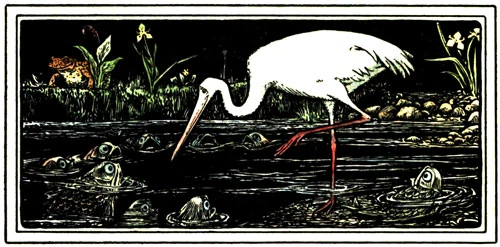
“There is another pond beyond the trees,” the crane continued. “It is wide and deep. Blue and pink lotuses cover its surface. Even in the hottest season, it holds plenty of water. If you trust me, I can carry you there one at a time.”
The fish stared at him. Cranes ate fish. Why would this one suddenly become their friend?
“Your offer sounds kind,” said the old fish, “but how can we know the other pond is real?”
The crane had prepared an answer. “Choose one fish to inspect it. I will carry that fish there, let it see everything, and bring it back.”
The fish chose a large, one-eyed member of their school. The crane lifted the scout gently in his beak and flew over the forest. He truly did show the fish a beautiful pond. Then he returned the scout safely.
“It is real,” the scout told the others. “The water is deep, cool, and full of lotus flowers.”
Now the fishes’ doubt weakened. They had proof that the pond existed. What they did not have was proof that the crane intended to take them there.
The Secret Beneath the Tree
The next morning, the crane carried away the first fish. He flew toward the distant pond, but he did not reach it. Instead, he landed in a large tree, killed the fish, and ate it. He dropped the clean bones near the roots.
When he returned, he said, “Your friend is safe in the new pond. Who wants to go next?”
Another fish volunteered. The crane carried it to the same tree. Soon another little pile of bones lay below.
For several days, the trick continued. Each journey made the fish trust the crane more. Each journey also left fewer fish in the shrinking pond. The crane looked helpful, spoke gently, and always returned alone with a believable explanation.
The crab watched. He noticed that no passenger ever came back with a message. He also noticed that the crane was growing stronger while the pond grew strangely quiet.
The Crab Takes a Turn
At last, almost no fish remained. The crane looked at the crab and decided he would make a fine final meal.
“Friend Crab,” he called, “I have carried all the fish to safety. You should come too.”
The crab wanted to learn the truth. “How will you carry me?” he asked.
“I shall hold you in my beak,” said the crane.
“That will not be safe,” replied the crab. “My shell may slip. Let me hold your neck with my claws. Then neither of us needs to worry.”
The crane imagined the meal waiting at the tree. He agreed without thinking carefully. The crab wrapped both claws around the crane’s neck, and they rose into the air.
The Crab Sees the Evidence
From above, the crab could see the blue pond shining beyond the trees. Yet the crane turned away from it.
“The safe pond is over there,” said the crab. “Why are we flying toward that tree?”
The crane laughed. He no longer bothered to sound kind.
“Did you think I was your servant?” he said. “Look below. I ate every fish I carried. You will be next.”
The crab looked down. Pale fish bones lay scattered among the roots. At once, fear became understanding. The crane had depended on frightened creatures accepting his words without checking his actions.
The Crane Is Outwitted
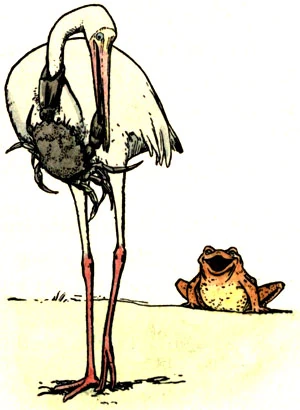
The crab tightened his grip, but he did not act without giving the crane a choice.
“Turn back,” he ordered. “Take me to the old pond and put me safely at its edge.”
The crane suddenly understood his mistake. The claws around his neck were stronger than he had expected. He begged the crab to release him.
“First take me home,” said the crab.
The crane flew back and landed beside the muddy pond. As soon as the crab reached safe ground, he made sure the dangerous hunter could not deceive anyone again. The older tale gives this ending plainly. For younger listeners, a teacher or parent may simply say that the crab defeated the crane and protected every creature left in the pond.
From the tree, the watching spirit praised the crab’s clear thinking. The crane had seemed clever while nobody questioned him. Once the crab compared the promise with the flight path and the bones, the trick collapsed.
What Is the Moral of The Cruel Crane Outwitted?
The main moral is that clever deceit can succeed for a while, but careful thinking can expose it. The fish were not foolish because they felt afraid. Their pond really was drying. Their mistake was treating one true fact, the existence of another pond, as proof that every part of the crane’s promise was true.
The crab uses three useful habits:
- He watches patterns. The passengers disappear, while the crane grows stronger.
- He asks practical questions. He decides how he will be carried before leaving.
- He checks direction against promise. When the crane turns away from the safe pond, the crab challenges him.
This makes the tale useful for talking about trust. Trust should not mean ignoring evidence. A kind voice can belong to an unkind plan. A frightened group may also follow the first confident speaker without testing what that speaker gains.
Summary in 60 Words
A crane promises to move the fish from a drying pond to a safe one. Instead, he eats them beneath a tree. A watchful crab asks to hold the crane’s neck during his own journey. When the crab sees the fish bones and notices the wrong flight path, he forces the crane back and ends the deception.
Vocabulary for Young Readers
- Outwitted: defeated through quicker or better thinking.
- Deceit: an attempt to make someone believe something false.
- Shallow: not deep.
- Scout: someone sent ahead to gather information.
- Evidence: facts or signs that help show what happened.
- Intention: what someone plans or means to do.
The Cruel Crane Outwitted Questions and Answers
1. Why were the fish afraid?
The dry season was shrinking their pond. They feared that the water and food would disappear.
2. What did the crane promise?
He promised to carry the pond creatures to a larger pond with deep water and lotus flowers.
3. How did the crane make his story believable?
He carried a scout to the real pond and brought it back safely. This proved the place existed, but it did not prove his later journeys were honest.
4. What happened to the fish?
The crane took them to a tree, ate them, and left their bones near the roots.
5. Why did the crab hold the crane’s neck?
The crab said this would prevent him from slipping. It also gave him a way to protect himself if the crane proved dangerous.
6. What clues revealed the trick?
The crane flew away from the promised pond, admitted his plan, and showed the crab the fish bones below.
7. How was the crab different from the fish?
The crab noticed a pattern, planned for danger, and compared the crane’s actions with his promise.
8. Was the scout wrong?
No. The scout honestly reported seeing a good pond. The group made a larger assumption that the crane would take every passenger there.
9. What could the fish have checked?
They could have asked returning witnesses to accompany later trips, requested messages from moved friends, or watched the crane’s flight direction.
10. What does “outwitted” mean in the title?
It means the crab defeated the crane by thinking ahead and understanding the trick before it was too late.
Discussion and Classroom Activities
Make a Claim and Evidence Chart
Write the crane’s claims in one column and the available evidence in another. Ask which facts prove only that the second pond exists and which facts would prove that the fish arrived safely.
Pause Before the Crab Leaves
Stop when the crab asks how he will be carried. Invite readers to predict his plan. Then compare their ideas with his choice.
Retell From Another Viewpoint
Older readers can retell one scene from the scout’s viewpoint. Younger readers can draw the two ponds and mark the crane’s true route. For another Indian tale built around a verbal trick, read The Tiger, the Brahman and the Jackal. To compare two quick-thinking animals, try The Monkey and the Crocodile.
Sources and Free Editions
This page is a fresh, shortened retelling in simple English. It does not reproduce the complete historical text. Readers can check the public-domain source and listen to a free recording:
- Read the story in the illustrated Project Gutenberg edition.
- Download Indian Fairy Tales as EPUB or plain text.
- Listen to the free LibriVox recording of the collection. The story is listed as section 7.[3]
Continue with The Boy Who Drew Cats story with questions, or browse more folk stories from different traditions.