
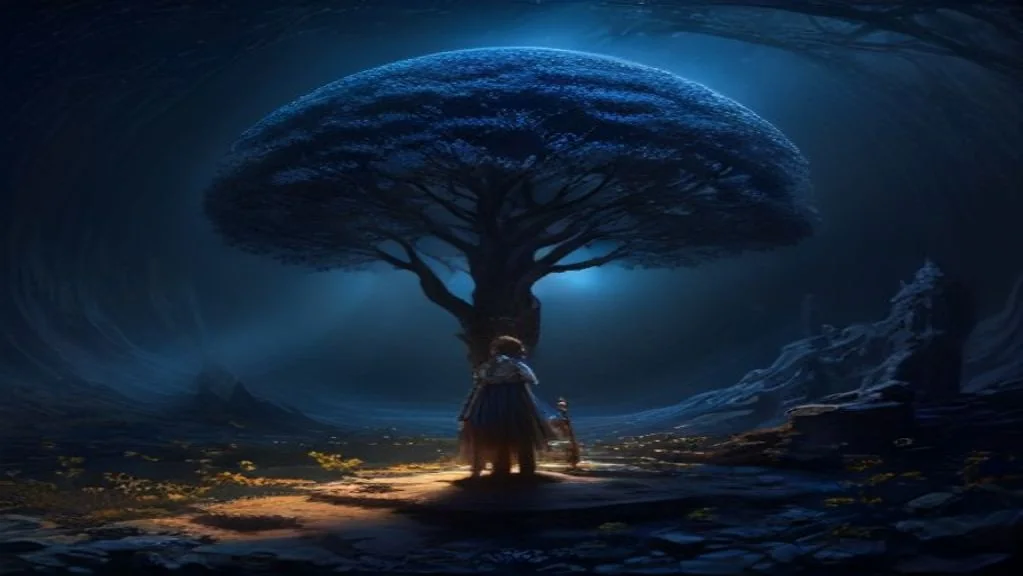
AI-generated illustration.
The Moonseed Library is an original science fiction story for kids about courage, curiosity, and protecting knowledge. It follows twelve-year-old Tara Sen as she discovers a forgotten garden beneath the Moon’s oldest library.
Story details: Ages 8–12 | Reading time: about 9 minutes | Themes: courage, cooperation, curiosity, and conservation
The Moonseed Library
In 2189, children on Earth learned about forests from recordings.
They watched old branches bend in storms. They heard rain striking broad green leaves. Sometimes, teachers opened sealed jars containing the scent of wet soil.
Tara Sen loved those lessons, although they made her strangely homesick. She missed a world she had never known.
Most plants now grew inside protected towers. Every leaf had a number, and every drop of water followed a schedule.
Tara lived far above those towers on Chandrapur Station, the first permanent city on the Moon. Her mother repaired oxygen systems there.
Chandrapur had silver corridors, blue lamps, and windows facing Earth. It also had one very old building.
The Moonseed Library stood at the edge of the city beneath a cracked glass dome. Nobody seemed certain why it had that name.
Inside, thousands of books rested in narrow metal drawers. Dust floated above them like tiny stars.
Tara visited every evening after school. The librarian, Mr Ilyas, usually sat beside the entrance, repairing paper pages with a careful brush.
“Books survive when someone chooses to care for them,” he often said.
One evening, Tara found his chair empty.
A note waited beneath his reading lamp.
Tara, the library needs a listener tonight. Begin where the rain ends.
She read the message twice. Chandrapur had no rain.
Then she remembered the sound archive.
At the back of the library, visitors could hear recordings from Earth. Tara selected a file called Monsoon, Kolkata, 2097.
Rain rushed through the headphones. Tram bells rang somewhere beyond the storm. A street vendor laughed under a shelter.
The recording ended with three soft clicks.
A nearby shelf answered with three clicks of its own.
Tara removed the headphones and followed the sound. Behind a drawer of weather journals, she discovered a small copper button.
She pressed it.
The shelf slid sideways, revealing a lift barely wide enough for one person.
Its control panel displayed a single word.
ROOTS.
The Garden Beneath the Moon
The lift carried Tara below the library.
She expected a storage room. Instead, the doors opened onto darkness warmer than summer.
A golden light appeared near her shoes. Then another light flickered ahead.
Rows of glass chambers brightened across a vast underground hall. Each chamber held shelves filled with seeds.
There were rice grains striped like tiny tigers. Beans shone purple and black. Winged seeds trembled beneath gentle fans.
A round machine rolled toward Tara. It had six wheels and one green camera eye.
“Unauthorized human detected,” it announced. “Please state your gardening qualification.”
“I kept a cactus alive for eight months,” Tara replied.
The machine paused.
“Qualification accepted. Standards have declined.”
Its name was Moss, although no moss grew on it. Moss explained that the library protected seeds collected before Earth’s great crop failures.
Each seed carried a map of survival. Some resisted salt. Others endured heat, floods, or unfamiliar diseases.
“Why is this place secret?” Tara asked.
“It was not meant to remain secret,” Moss said. “It was meant to remain safe.”
At the centre of the hall stood an empty glass chamber. A warning light flashed above it.
COLLECTION FAILURE: 17 HOURS REMAINING.
Moss showed Tara a silver seed inside a transparent case. Thin blue veins crossed its shell.
“This is the moonseed,” the robot said. “It was grown from twelve endangered plants.”
The scientists who created it hoped one plant could restore damaged soil. However, the seed had never opened.
Now the underground cooling system was failing. By morning, rising heat would destroy the oldest seeds first.
“Call the city council,” Tara said.
“The library’s communication line was disconnected thirty-one years ago.”
Tara ran toward the lift. Its doors remained closed.
The warning had triggered an automatic lockdown.
She was trapped beneath the Moon with a sarcastic robot and several million seeds.
A Message Written in Roots
Tara searched the laboratory while Moss tested the cooling pipes.
Most screens displayed corrupted files. One screen showed a woman standing beside the empty chamber.
“A seed is not a machine waiting for a command,” the scientist said. “It opens after receiving the right story.”
The recording skipped.
“Water carries the story of where it has travelled. Give the moonseed water that remembers a living world.”
The screen went dark.
Tara stared at the sealed case.
“Water cannot remember,” she said.
“Correct,” Moss replied. “Water has no nervous system and performs poorly in examinations.”
Yet Tara understood the scientist’s meaning. The seed needed more than purified station water.
It needed the minerals and microscopic life found in healthy soil.
“Does the library contain anything from an old forest?” she asked.
Moss projected a map. One item appeared inside the sound archive above them.
Years earlier, someone had stored a raindrop with the Kolkata monsoon recording. The drop remained sealed inside the original collection capsule.
They still could not reach it.
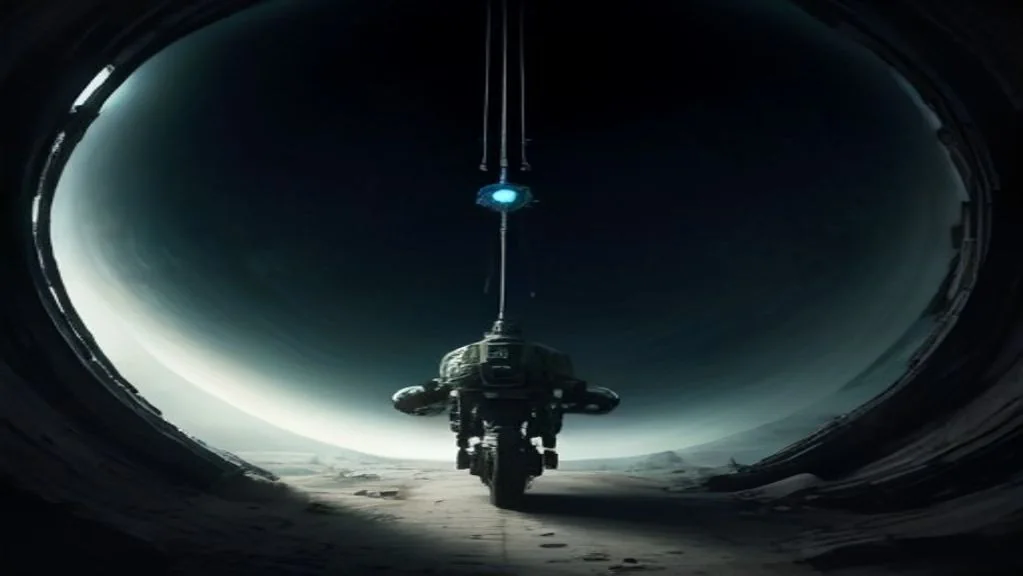
Tara examined the underground pipes. A narrow maintenance tube ran upward beside the broken lift.
Moss was too wide for the tube. Tara was not.
She removed her jacket and entered the passage.
The climb felt endless. Moon gravity made her lighter, but sharp bolts caught her sleeves.
Halfway up, a fan began turning beneath her.
“Moss!” she shouted.
“I am attempting to stop it.”
“Attempt faster!”
The blades spun closer. Tara pressed her shoes against opposite walls and pushed upward.
The fan stopped with one blade touching her heel.
“Was that faster?” Moss asked through her wrist speaker.
“Barely.”
The Last Drop of Rain
Tara reached the library and hurried to the sound archive.
Inside the monsoon case, a glass bead rested beneath the headphones. One ancient raindrop floated within it.
She carried the bead back through the maintenance tube.
Only two hours remained.
Moss placed the moonseed in a dish. Tara cracked the bead and released the raindrop.
Nothing happened.
The seed remained silver and silent.
Tara felt foolish. Perhaps the scientist had spoken in a metaphor. Perhaps thirty-one silent years had damaged everything.
Then she remembered the first instruction.
The library needs a listener.
“Play the rain recording,” she told Moss.
The underground hall filled with monsoon sounds. Rain struck roofs. Water rushed along streets. Distant thunder rolled through the seed chambers.
The silver shell trembled.
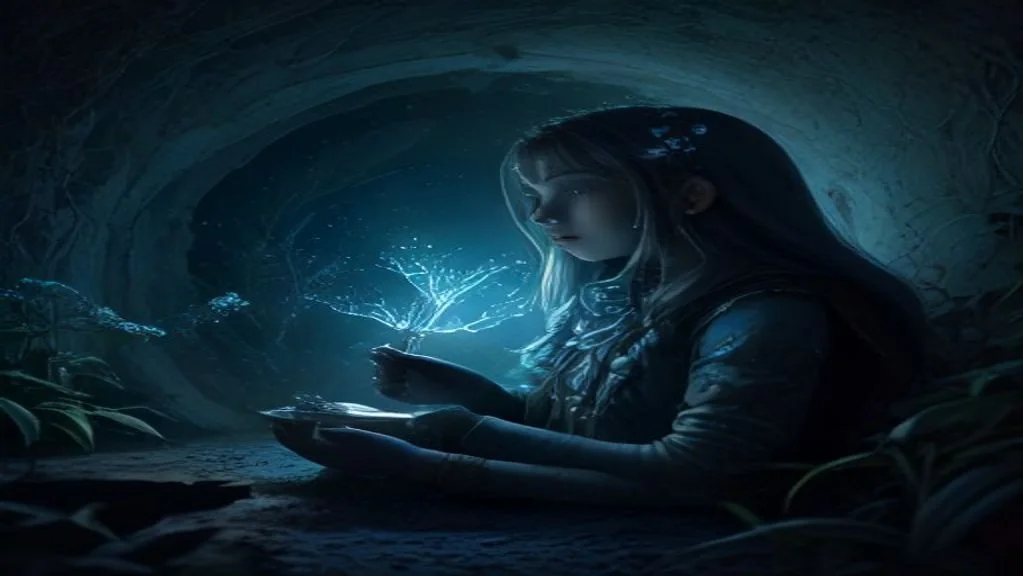
A blue root pushed through its side.
It entered a crack in the floor and divided into glowing threads. The threads spread beneath every chamber.
Cooling pumps awakened one after another.
Cold air swept through the hall.
The warning changed.
COLLECTION STABLE.
Tara laughed so loudly that her voice joined the recorded storm.
Above the root, a green shoot unfolded two tiny leaves.
Mr Ilyas stepped from the lift, followed by Tara’s mother and three city engineers.
“You knew about this place,” Tara said.
The old librarian nodded.
He had maintained the collection alone for years. When the cooling system began failing, he needed someone who could solve its oldest mystery.
“Why me?” Tara asked.
Mr Ilyas looked at the new leaves.
“Many people enter a library searching for answers,” he said. “You enter searching for questions.”
A Library That Grew
The Moonseed Library reopened one month later.
Scientists studied the underground collection, while children helped plant its safest seeds in Chandrapur’s new garden dome.
The moonseed grew into a small tree with silver bark. Its roots cleaned tired soil, just as its creators had hoped.
Earth received new seeds from the collection. In return, schools sent recordings of returning insects, fresh rain, and young forests.
Tara became the library’s first junior keeper.
She placed each recording beside a seed from the same place. Knowledge, she decided, should never remain separated from memory.
Years later, visitors asked why the library had saved so many seeds.
Tara always gave them Mr Ilyas’s answer.
“Living things survive when someone chooses to care for them.”
What Is the Message of The Moonseed Library?
The story shows that knowledge becomes valuable when people protect and use it responsibly. Tara succeeds because she listens, asks questions, and works with others. Her discovery also reminds readers that caring for nature requires both scientific understanding and human commitment.
Questions for Young Readers
- Why did Tara understand the scientist’s clue differently from Moss?
- Which part of Tara’s journey required the most courage?
- Why were the seeds stored beneath a library?
- What would you preserve for children living one hundred years from now?
- How did listening help Tara solve the problem?
Read More Stories
Explore more stories for kids, or enjoy The Star That Wanted to Sleep before bedtime.