
Source: Pexels.
Some horror stories to read online frighten us with monsters, while others expose the memories we have buried. This original tale follows a lonely passenger through Kolkata’s underground darkness.
Readers choosing horror stories to read online can enter this original Indian tale about grief, unanswered calls, and a station missing from every map. Read it somewhere quiet, preferably before the last train leaves.
The Last Metro from Platform Zero
The Call at 10:14
Every night at exactly 10:14, Arindam Sen’s telephone vibrated once.
The screen never displayed a number. It showed a grey circle, the word Unknown, and a call duration already counting backwards.
Ten seconds remained on the display. Nine seconds followed without a sound. Then the number eight appeared.
Arindam had never answered those calls. He would watch the numbers disappear, then place the telephone face down beside his keyboard.
Five years earlier, his younger sister Mili had called at precisely that hour. Arindam had been angry with her after a foolish argument about money.
He had silenced the telephone and returned to work. By midnight, police officers were standing outside his flat with rainwater on their shoulders.
They said Mili had fallen near the tracks at a central Kolkata station. Nobody could explain why she had crossed the yellow line.
Arindam remembered almost nothing after hearing those words. One detail survived with painful clarity. Her unanswered call remained on his screen until sunrise.
Since then, 10:14 had divided every day into two unequal parts. Dread gathered before that nightly moment. Afterwards came the older pain of surviving another night.
On the fifth anniversary, monsoon rain struck the office windows with enough force to shake the glass. Most employees left before nine.
Arindam stayed behind to finish a report nobody had requested. He preferred fluorescent light and unfinished spreadsheets to the silence waiting inside his flat.
The telephone trembled against his desk at 10:14.
This time, a familiar name appeared.
The screen displayed Mili’s name.
His chair rolled backwards and struck a cabinet. The ringing continued while the countdown fell through seven, six, and five.
Arindam seized the telephone on three.
“Mili, can you hear me?”
Static pressed against his ear. Beneath it, he heard a railway announcement spoken too softly to understand.
Then Mili whispered, “Dada, you missed the train again.”
The impossible telephone call ended immediately.
A Station After Closing
Arindam left the office without shutting down his computer. The lift refused to stop at his floor, so he descended fourteen flights.
Outside, Kolkata had become a restless sheet of water. Taxi drivers ignored him, and app bookings vanished before any vehicle arrived.
He walked towards the nearest Metro entrance. His shirt clung to his back, and rain filled his shoes within minutes.
The entrance shutter was halfway down. A handwritten notice announced that the final train had departed at 10:05.
An elderly guard sat behind the barrier and listened to a cricket discussion on a small radio.
“The station is closed,” the guard said without looking up.
“My sister called from inside.”
The guard finally raised his eyes. His expression changed when Arindam showed him the call record.
The screen displayed no name now. It showed only ten blank digits and a duration of negative seven seconds.
“Go home,” the guard said. “Some calls improve when left unanswered.”
Arindam pushed under the shutter before the old man could stop him.
The ticket hall remained brightly lit, although every counter was locked. Water from Arindam’s clothes marked the floor behind him.
He noticed something strange near the security gates. His footprints stopped after six steps, but he had continued walking.
The gates opened without a token. Their green arrows blinked together, pointing towards a narrow corridor beside the public toilets.
Arindam knew this station well. No corridor should have existed there.
A metal sign hung above the passage.
PLATFORM ZERO | LAST SERVICE 10:14
Fresh black paint covered an older message. Through several scratches, Arindam could read two words underneath.
Reserved for final departures only.
Platform Zero
Arindam had expected emptiness beneath a closed station. Platform Zero was crowded, which made it considerably worse.
Dozens of passengers waited beneath weak yellow lamps. Nobody spoke, checked a telephone, or looked towards the tunnel.
Their clothes belonged to different decades. A clerk wore a wide-collared shirt from the seventies. A schoolgirl carried a metal lunch box.
Near a pillar, a soldier held a faded blue railway ticket. An old woman hugged a shopping bag printed with a supermarket logo Arindam remembered from childhood.
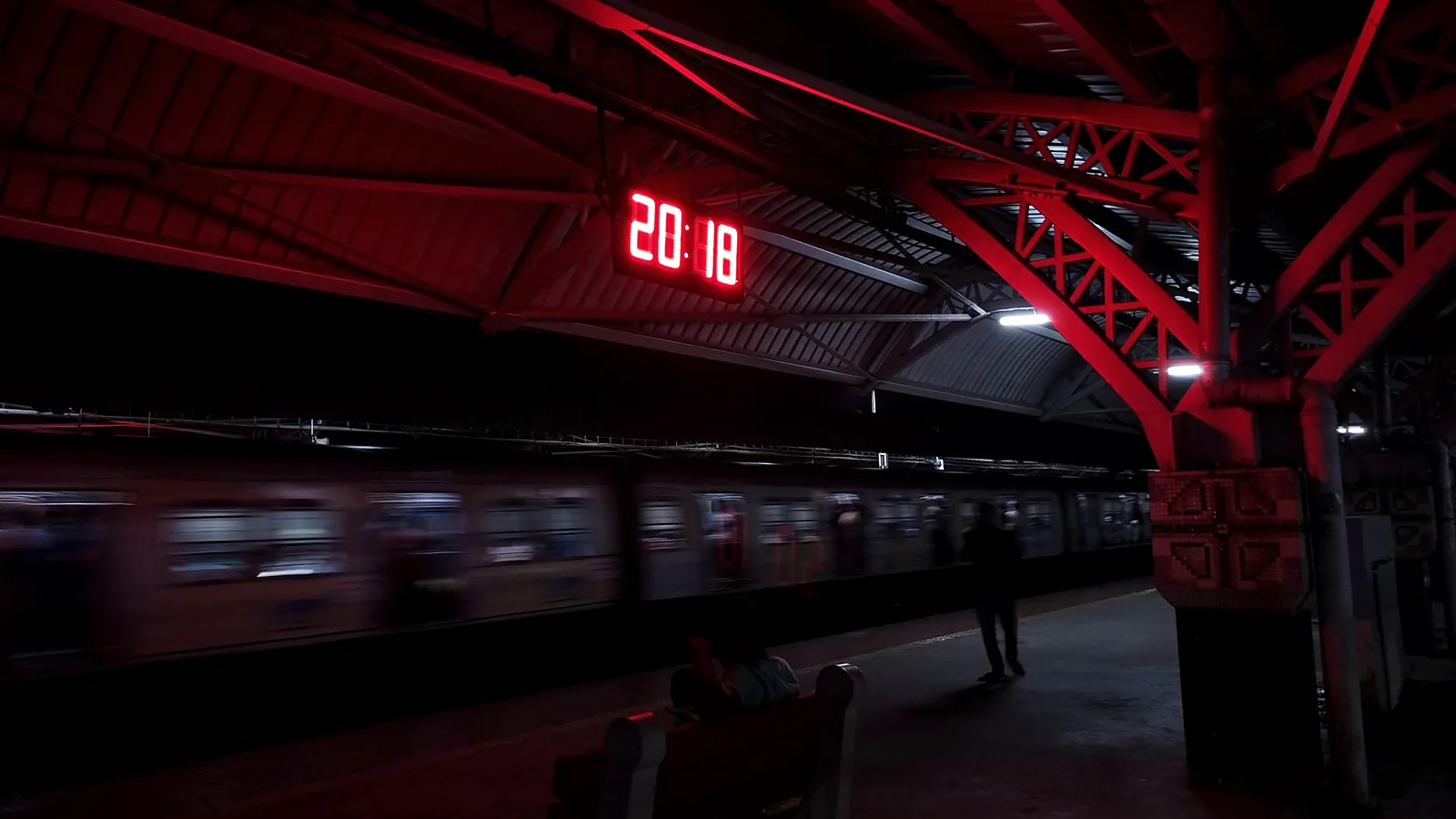
Every clock displayed 10:14.
Arindam crossed the platform towards the schoolgirl. “Have you seen a young woman named Mili?”
She stared at his wet shirt. “Did she telephone you tonight?”
“Yes, she called me just now.”
“Then she is either on the train or waiting outside.”
“What do you mean by outside?”
The girl looked beyond him. Her eyes widened, and she stepped away.
A railway employee stood behind Arindam. She wore a dark uniform and carried a brass ticket punch.
Her name badge read Mrs Basu. Beneath the name, smaller letters said Night Conductor, 1984 to 1984.
“Show me your ticket,” she said.
“I came through the gate.”
“Everyone comes through a gate. I asked for your ticket.”
Arindam searched his pockets and found a rectangle of stiff paper. He had never seen it before.
One side carried his name. The other listed a destination called REMEMBRANCE.
Mrs Basu punched a small hole through the printed date. The paper felt suddenly cold.
“What happens at Remembrance?” Arindam asked.
“Passengers remember what truly happened here.”
“I already remember what happened.”
Mrs Basu studied him with tired kindness. “That is what every passenger says before boarding.”
The Train Without a Driver
A white light appeared inside the tunnel. No wind preceded it, and the rails remained silent.
The train emerged slowly, its windows black and its destination panel empty. Rust streaked the silver body like dried tears.
When the doors opened, cold air carried the smell of wet newspapers.
No passenger left the waiting train. The crowd entered in perfect order, each person choosing an empty seat without looking around.
Arindam hesitated until he heard Mili’s voice from the final carriage.
“Dada, you must hurry now.”
He boarded as the warning bell rang.
Inside, the route map displayed no station names. It showed dates connected by a red line.
The map displayed 23 June 1984, 4 September 1997, and 18 August 2021.
The final date was tomorrow.
Arindam chose a seat beneath it. Across the aisle, the old woman opened her shopping bag and removed a folded newspaper.
Every seated passenger carried one newspaper. Pages unfolded throughout the carriage with a dry whisper, although the paper looked damp.
A newspaper waited beside Arindam. Its date was tomorrow’s date.
The front page reported a signal failure near a central Metro station. Beneath the headline appeared a smaller article.
LOCAL ACCOUNTANT FOUND DEAD AFTER FIVE-YEAR DISAPPEARANCE.
The picture showed Arindam wearing the same wet shirt.
He dropped the newspaper onto the floor. Across the aisle, the old woman folded hers carefully.
“Those papers are frequently wrong,” she said. “Mine has predicted Thursday for forty years.”
“Are all of us already dead?”
She carefully considered his frightened question. “Some passengers are already dead. Others have simply been remembered for too long.”
The Passengers’ Last Calls
The train accelerated, yet no station lights passed beyond the windows. Darkness followed them like deep water.
Mrs Basu moved through the carriage, punching tickets. Each click released a brief human sound from somewhere overhead.
A mother called her son’s name. A frightened man offered an apology. A child asked whether anyone was coming home.
When Mrs Basu punched the schoolgirl’s ticket, a woman screamed, “Please get away from the road.”
The girl shut her eyes. Her metal lunch box shook against her knees.
“What are those voices?” Arindam asked.
“Calls that arrived too late,” Mrs Basu said.
“Mili called before she died.”
“Are you certain she did?”
Arindam showed her the telephone. The call history had changed again.
Instead of one missed call from Mili, the screen held hundreds. They appeared on the same date every year, always at 10:14.
Five years of calls filled the screen. Not one call had been answered.
“This is impossible,” he said.
“That word has never stopped a train.”
Arindam dragged his thumb backwards through the call history. Each call contained a voicemail he had never noticed.
The first recording started with violent breathing and station noise.
“Dada, the ambulance is coming now. Please remain here beside me. You must open your eyes.”
One year later, the second message was recorded.
“I visited Ma earlier today. She still sets your cup beside the kettle.”
Another came from the third anniversary.
“I finally got the teaching job. You always said that I would.”
The most recent recording began with quiet crying.
“I am getting married next month. I wanted you to know before I said goodbye.”
Arindam pressed the telephone against his chest. His memory fought the evidence with desperate force.
Police officers stood outside his flat. He heard them saying Mili’s name. Rain, uniforms, and a covered body returned in pieces.
However, he could not remember opening the door.
He could not remember attending her funeral.
He could not recall anyone speaking to him directly afterwards.
The Carriage Ahead
A figure appeared behind the glass door connecting the next carriage. Mili stood there in a yellow kurta, exactly twenty-three years old.
She placed one palm against the glass.
Arindam stumbled down the aisle towards her. The connecting door refused to open until Mrs Basu touched the brass punch against its lock.
“One station remains,” the conductor said. “You must choose your memory carefully.”
Arindam entered the next carriage. Mili waited alone beneath a flickering light.
He stopped several steps away. Hope hurt far more than fear.
“I am terribly sorry,” he said. “I should have answered your telephone call.”
Mili’s expression folded with sadness. “You keep saying that, Dada.”
“You called me before the accident.”
“No, because I called after it happened.”
Every light inside the train failed. When they returned, Mili was older.
Silver threads touched her hair. A wedding ring circled one finger, and fine lines surrounded her eyes.
“You died five years ago,” she said.
Arindam staggered several steps backwards. “I went to work this morning.”
“That office closed during the pandemic. The entire building now stands empty.”
“The police came to my flat.”
“They came to tell Ma about you. I was at the hospital.”
Arindam touched his soaked shirt. The cloth beneath his fingers changed into torn blue cotton stained almost black.
The lost memory returned without mercy.
He had waited on a crowded platform after arguing with Mili. A little boy dropped a red toy onto the tracks.
The boy climbed down while his mother searched inside her bag. Arindam saw the tunnel brighten.
He jumped after the child and lifted him towards the platform. Several hands pulled the boy to safety.
Nobody reached Arindam before the approaching train arrived.
Mili’s incoming call began inside his pocket at 10:14. She was calling to apologise for their argument.
His telephone survived beneath the platform edge. The impact killed Arindam before help arrived.
The countdown had never measured time remaining on a call. It measured the seconds between his jump and the train.
Remembrance
Fear had followed Arindam through the entire tunnel. Now he discovered that guilt could survive even after its owner died.
Beyond the window, tiled walls appeared. The train entered a station filled with white flowers and small paper tickets.
A white sign announced the station name, REMEMBRANCE. Beneath it, another line had been written by hand.
Living passengers must return before morning.
“Why did I remember Mili dying?” Arindam asked.
“Because I kept calling you,” she said. “My grief reached you, but the words arrived broken.”
“Are you truly standing here?”
“Part of me is sleeping on a bench above your memorial plaque. I came to make the final call.”
The carriage doors slowly opened. Passengers stepped onto the flower-covered platform and walked towards separate staircases.
Some passengers climbed towards the light. Others descended beneath the platform. A few remained seated, gripping newspapers that promised another tomorrow.
Mrs Basu waited beside the door. “Your ticket allows one transfer.”
Arindam looked directly at Mili. “Can I return with her?”
“You may return as a memory,” Mrs Basu said. “That is how haunting begins.”
Mili slowly shook her head. “Ma hears you in the kitchen. I hear you whenever trains brake. We cannot keep living beside your last minute.”
Arindam opened his mouth to protest. He had spent five years believing he had failed her.
Now he understood that she had carried the heavier burden. She remembered his courage and still blamed herself for making the call.
“Did the boy live?” he asked.
Mili smiled quietly through her tears. “The boy’s name is Rohan. He sends Ma a card every August.”
The story of his death had continued without him. It contained a boy, a grieving mother, and a sister preparing for marriage.
Arindam had mistaken their love for chains because chains were easier to understand.
He removed the cold ticket from his pocket. The destination had changed from REMEMBRANCE to END OF LINE.
“Answer once more,” Mili said.
His telephone rang again beside his heart. The screen showed her older face and the familiar countdown.
Arindam accepted the call before the first number disappeared.
“I heard everything,” he said.
Above them, the station dissolved into rain and early morning light.
The First Train
Mili woke on a bench near the closed entrance. Her telephone rested against her ear, although the battery had died hours earlier.
The old guard lifted the shutter and watched commuters gather outside.
“Did you reach him?” he asked.
Mili wiped the tears from her face. “Yes, and I think he finally answered me.”
The guard nodded towards the tracks. “Then the first train should arrive normally today.”
At 5:45, a northbound train entered the station. Its windows reflected every waiting passenger except one.
Mili saw Arindam inside the driver’s cabin. He wore a clean white shirt and held a red toy in one hand.
He smiled, placed the toy on the control desk, and disappeared when the carriage crossed into sunlight.
Metro workers later found something beneath the old memorial plaque.
It was a stiff paper ticket punched with two dates. One marked Arindam’s death, while the other marked Mili’s wedding day.
No worker recognised the printed destination.
The final destination simply read HOME.
Why This Ghost Story Set in Kolkata Stays with You
Among the many horror stories to read online, supernatural journeys work best when their danger reflects a recognisable wound. Arindam fears the train, but his false memory holds the real threat.
People seeking horror stories to read online will recognise details from Kolkata’s late-night transport system. However, Platform Zero, its passengers, and every character are original creations for Online Story Hub.
If you prefer gentler nighttime reading, visit The Star That Wanted to Sleep. Readers who enjoy loyalty and emotional choices may also like Yudhishthira and the Dog.
Frequently Asked Questions About Horror Stories to Read Online
What is The Last Metro from Platform Zero about?
Among our horror stories to read online, this tale follows Arindam Sen aboard a supernatural Kolkata Metro train. The journey forces him to recover the truth about his own death.
Is this Indian horror story in English completely original?
The story is entirely original. Its plot, characters, supernatural railway, and final revelation were created for Online Story Hub. It does not adapt a published ghost tale or urban legend.
Why do readers enjoy horror stories to read online?
Online horror offers immediate, private access to suspenseful fiction. Readers can choose atmospheric ghost stories, psychological fear, supernatural mysteries, or short horror stories with surprising endings.
Is this horror story suitable for children?
The story contains death, grief, supernatural imagery, and sustained dread. It is better suited to teenagers and adults than young children or sensitive readers.
Where can I find more horror stories to read online?
Readers can discover more horror stories to read online through the Online Story Hub Horror category. Future stories will explore haunted places, strange technology, psychological fear, and Indian supernatural settings.